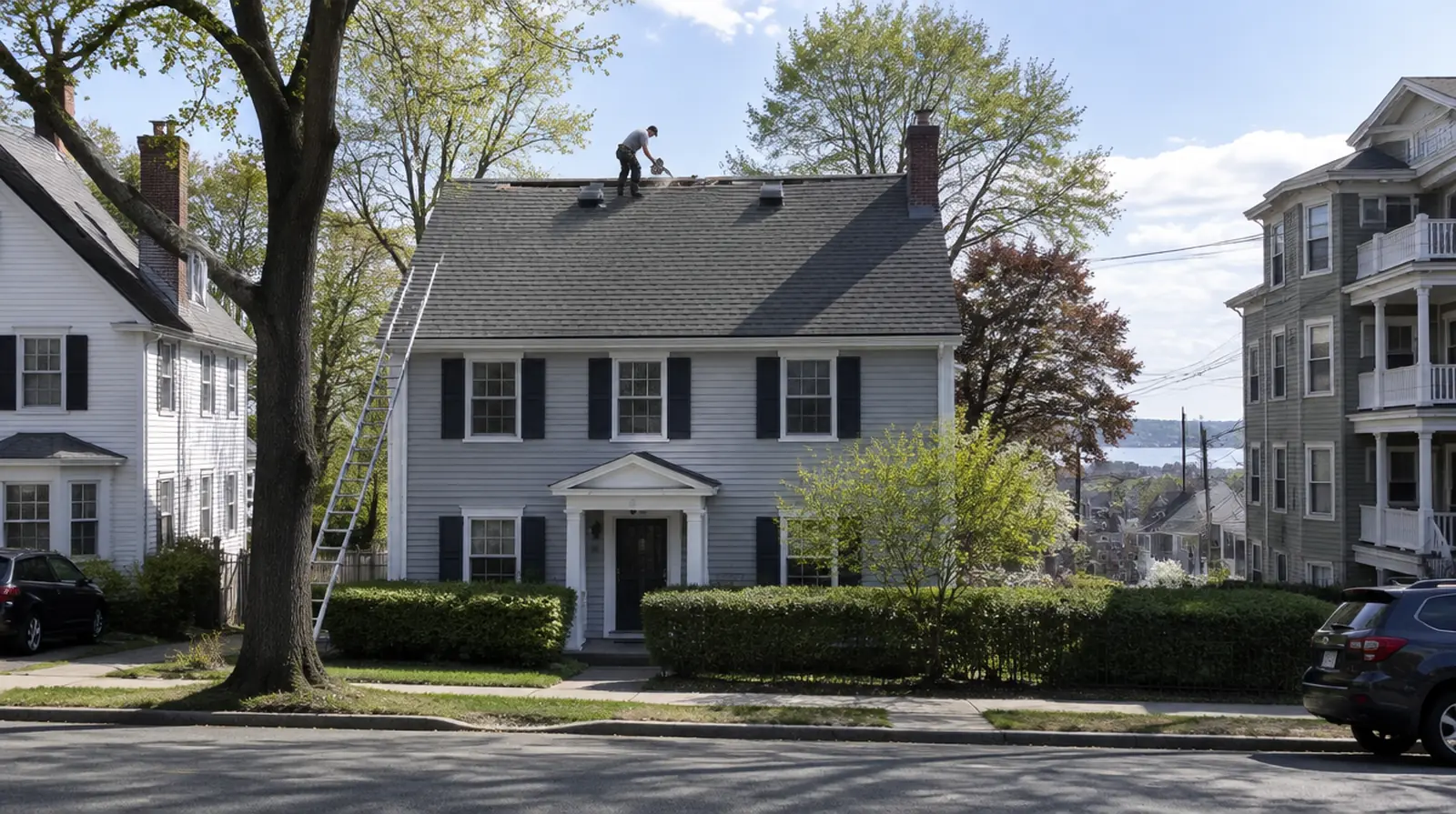
What roof ventilation work involves
Attic ventilation works by letting cool air in low and warm air out high. Intake vents at the soffits or eaves feed fresh air in; a ridge vent or other exhaust near the peak lets heated, moist air leave. Many New Haven houses were built long before anyone thought about attic air flow, so they may have no soffit vents, a single gable louver or insulation packed tight against the roof boards. We find those gaps and set up a system with balanced intake and exhaust.
The work can include cutting in a continuous ridge vent, adding soffit or drip-edge intake vents, installing baffles in each rafter bay to keep insulation clear and closing off old vents that disrupt the flow.
Our roof ventilation process
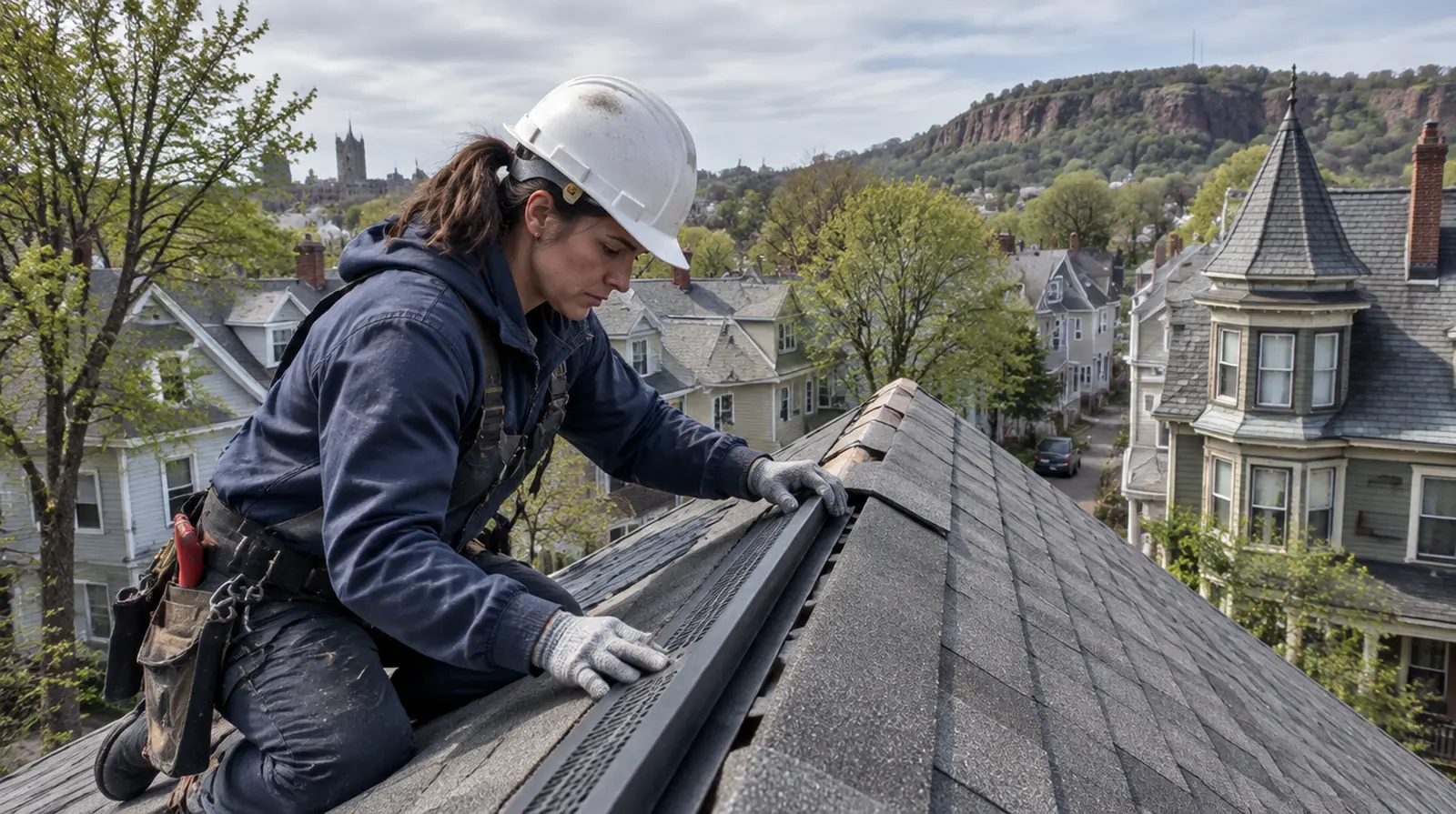
We start in the attic or top-floor crawl spaces, looking for frost marks, dark stains, damp insulation and how hot or cold the space feels. We check where bath and kitchen fans vent, since fans that empty into the attic add a lot of moisture. Outside, we look at the soffits, roof vents and gable vents. Then we figure out how much intake and exhaust the attic needs, explain the plan and give you a written price. Most ventilation work takes a day or less and fits neatly into a roof replacement.
When better ventilation is needed
- Ice dams build along the eaves each winter.
- Frost or water droplets form on the underside of the roof boards.
- Top-floor rooms stay hot all summer.
- Shingles are curling or blistering early.
- The attic smells musty or shows mold on the wood.
Why ventilation matters in this heat and cold
Humid Connecticut summers can push attic temperatures far above outdoor levels when heat has no way out, aging shingles from below and making top-floor units uncomfortable. In winter, warm, moist air from the living spaces rises into the attic and condenses on the cold deck, leading to frost, mold and wet insulation. That same warmth melts snow on the roof, which refreezes at the eaves as ice dams. Balanced ventilation, along with air sealing from below, addresses both seasons.
What affects ventilation project cost
- Attic layout. Chopped-up attics and finished top floors need more work.
- Soffit condition. Older homes may need new intake vents added.
- Baffles. Installing them in each bay adds labor.
- Timing. Adding ventilation during a replacement costs less.
A balanced system versus more vents
Piling on vents does not solve the problem. When a ridge vent, roof louvers and gable openings are all mixed together, air can slip in and out near the top and never draw fresh air up from the eaves. A powered fan with too little intake can even pull heated air from the rooms below. We set up one clear route, low intake and high exhaust. Planning new asphalt shingle roofing? Ventilation belongs in the same project. Already seeing stains? A leak repair visit can tell whether rain or condensation is to blame.
Ventilating older New Haven houses
Victorians and multi-family houses often have attics broken up by dormers, knee walls and finished rooms. Many have deep cornices with no soffit vents. For these homes we use vent channels in sloped ceiling bays, edge intake vents above the gutter line where soffits are missing and careful sealing of attic hatches and gaps around chimneys and pipes.
Roof ventilation FAQs
Will ventilation stop ice dams on its own?
It helps a lot, but sealing air leaks and adding insulation matter just as much.
Should bath fans vent outside?
Yes. Fans that blow into the attic add moisture that causes frost and mold.
Can you add a ridge vent to my current roof?
Often, yes, by cutting a slot at the peak and installing vent and cap shingles.
How do I schedule a visit?
Call (475) 252-7906 to set a time.
Want the attic to breathe?
Call (475) 252-7906 for a roof ventilation look and estimate.