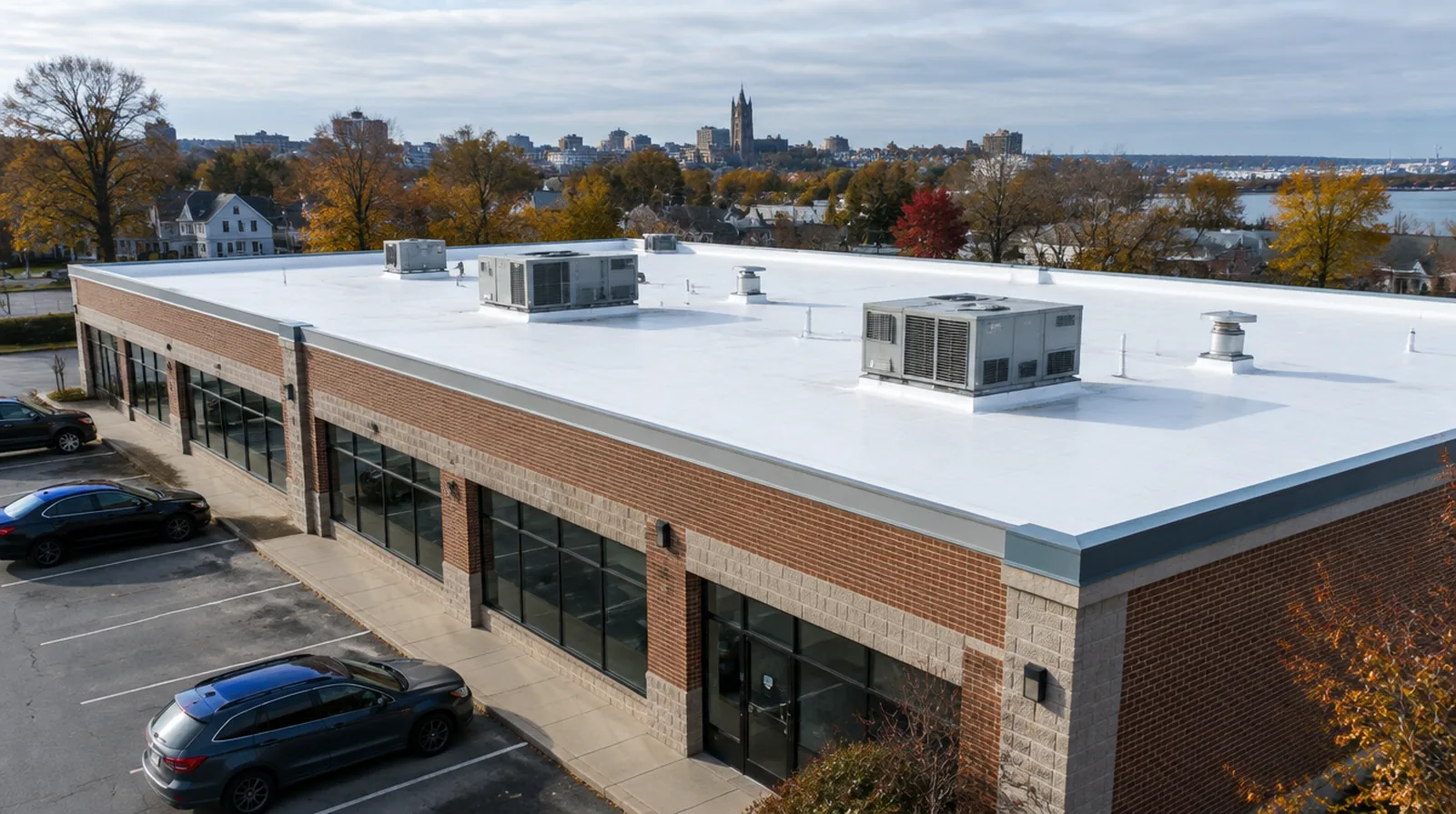
Buildings we see most in New Haven
Downtown and medical-campus roofs take constant HVAC foot traffic. Route 34 corridor plazas need quiet tear-off windows so tenants stay open. Long Wharf and harbor-adjacent buildings see wind-driven rain that finds weak parapet corners. Churches and older brick mixed-use blocks still carry built-up roofs that fail first at penetrations. Each pattern gets a different staging plan.
What we repair and replace
- TPO and other single-ply fields on plazas and newer low-rises.
- Modified bitumen and aged built-up roofs common on brick stock.
- Pitched shingle or slate sections on mixed-use fronts.
- Metal canopies and warehouse panels — details on metal roofing installation.
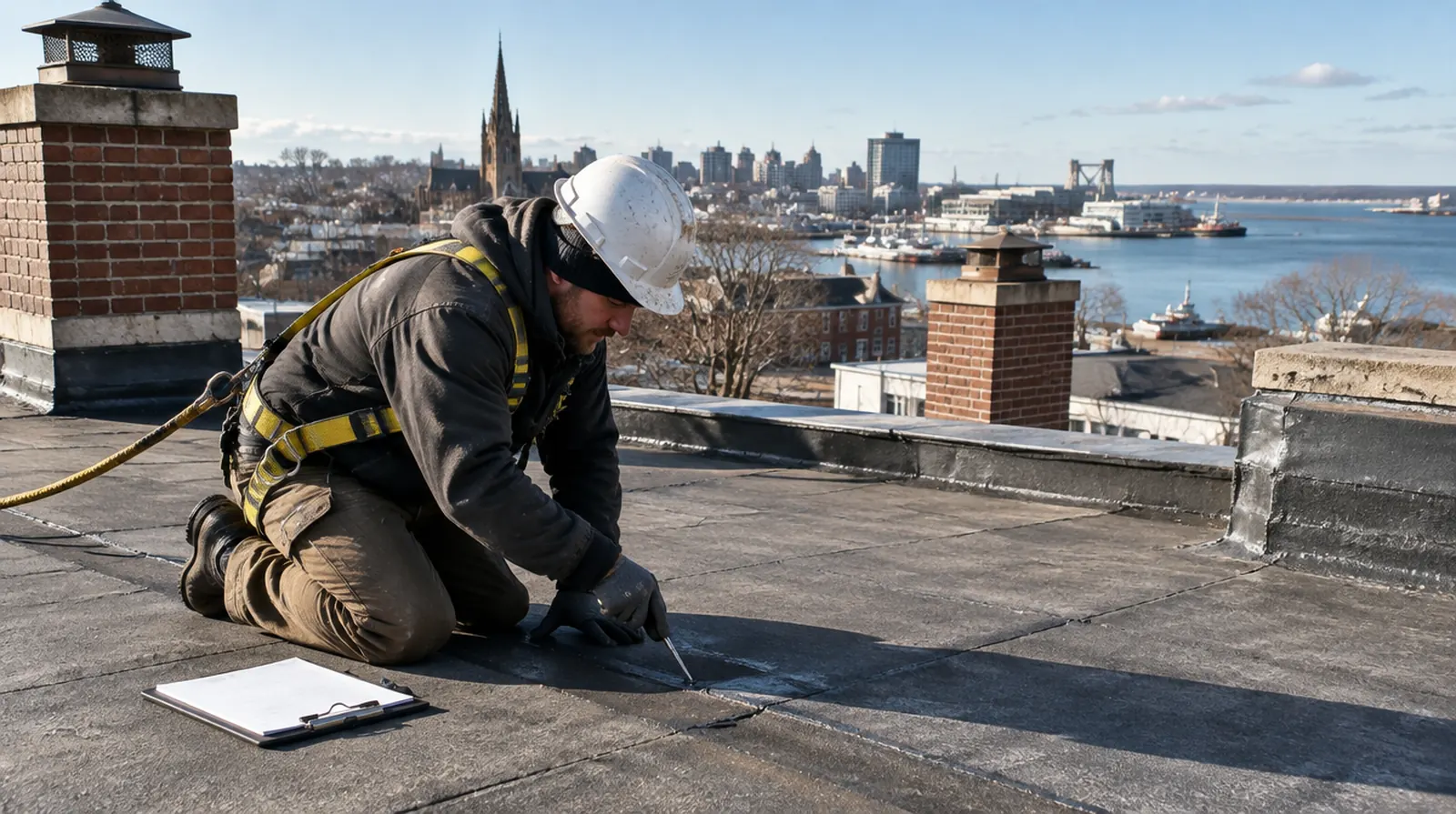
Sound climate, leaf season, ice
Long Island Sound keeps winters damp. Freeze-thaw pries open seams that looked fine in October. Street maples dump leaves into scuppers every fall; a clogged drain turns a January thaw into a rooftop pond. We clear drainage paths before leaf peak and schedule coatings when surface temperatures let adhesives cure instead of skinning over in a cold snap.
When a patch is enough — and when it is not
Many New Haven leaks start at a single curb, pitch pocket or wall transition. We isolate those first. Reflective coatings buy time only when the field membrane is still sound. Soft decking, widespread seam failure or repeated interior staining usually means a planned tear-off. Pre-purchase and storm follow-ups live on our roof inspection page.
Keeping managers ahead of callbacks
A spring and fall drain-and-seam walk is cheaper than another Saturday leak call. Buildings with perimeter gutters also need leaf-season gutter cleaning. Multi-site managers can get one calendar covering every New Haven address they oversee.
Job sequencing around tenants
Dumpster placement, freight-elevator rules and noisy tear-off hours get written into the scope before the first sheet comes up. Harnesses, edge protection and daily cleanup are baseline, not extras. Overnight dry-ins are scheduled with a permanent-repair date so temporary patches are never left to hope.
Harbor wind versus inland plazas
Waterfront roofs need stronger edge metal and more frequent fastener checks. Inland medical and retail roofs fail more often at walk-pad gaps and poorly flashed RTUs. We match edge details and walk-pad layouts to how each building is actually used, not a generic package.
Questions property teams ask
Can suites stay open during a tear-off?
Usually yes. We phase noisy work and protect entries so customers and staff keep using the building.
Will you document for insurance or a board?
Photo-rich reports and line-item scopes are standard. Claim outcomes stay between you and the carrier.
What happens on an active interior drip?
We prioritize temporary dry-in, then schedule the lasting repair once the source is clear.
Book a documented roof walk
Call (475) 252-7906. We photograph seams, drains and flashings, then send a written scope you can share with partners or a board.