What roof leak repair involves
Finding a leak means following water uphill. It enters through a gap on the roof, runs along the underlayment, deck or framing, and finally drips where it finds an opening in the ceiling. In older homes with plaster ceilings and complicated framing, that path can be long and indirect. We trace it from inside to out to find the real source.
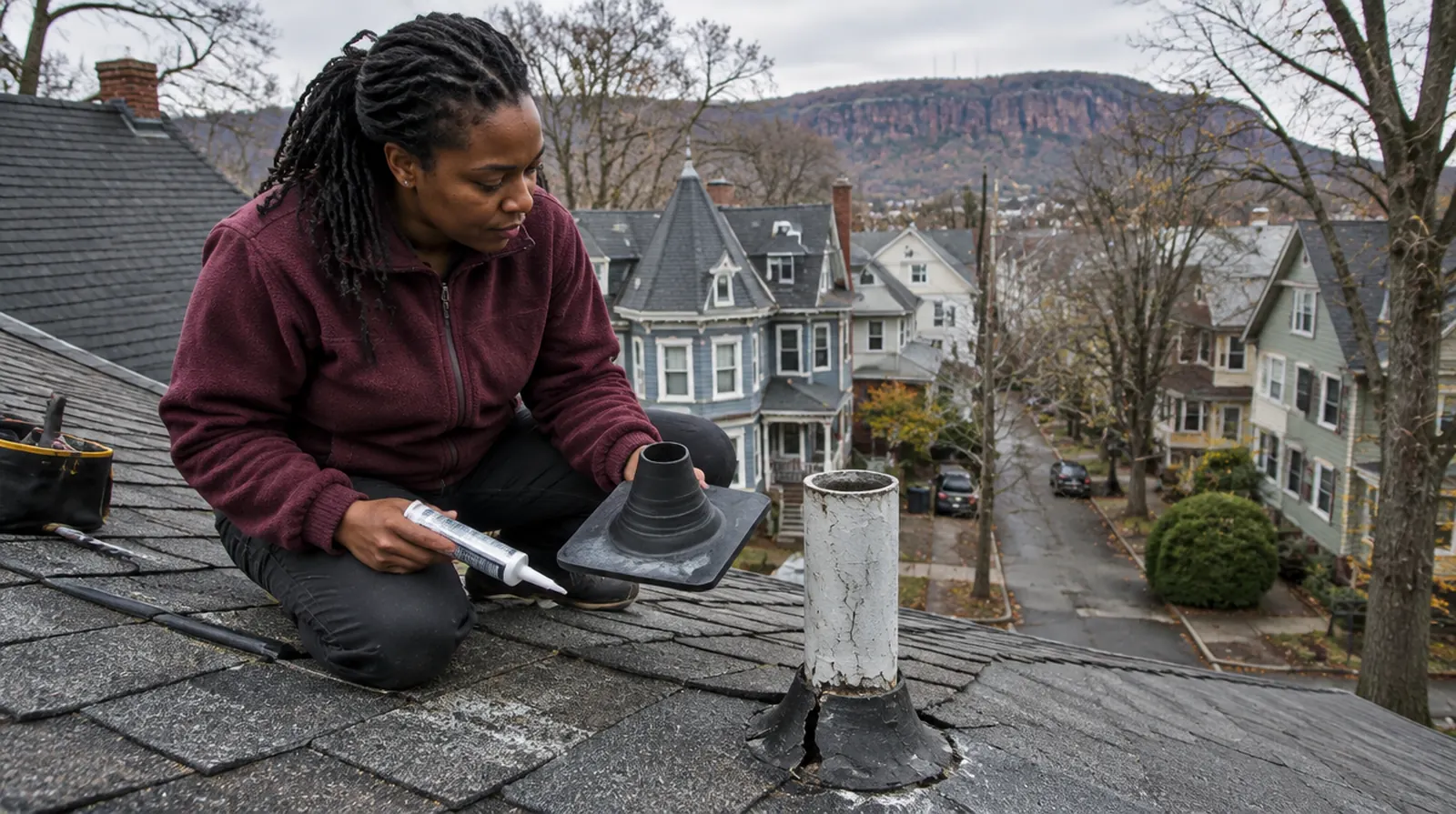
Common causes here include failed chimney flashing, step flashing along dormers and second-story walls, cracked collars around plumbing vents, open seams on flat rear roofs, ice dams at the eaves and leaking box gutters hidden in cornices.
How we find and fix leaks
We ask when the leak appears: during heavy rain, in wind from a certain direction, after snow or during a thaw. In the attic or top floor we follow water marks toward the most likely source. On the roof we inspect every opening and seam along that path.
When the source is not clear, we water test one section at a time while someone watches inside. Once confirmed, we remove damaged materials, replace failed flashing, collars or membrane, repair any rotted deck and reinstall the roofing so the area is sealed. You get photos of what failed and how it was fixed.
When to call about a leak
- A ceiling or wall stain is spreading.
- Plaster is cracking, bulging or crumbling.
- Paint is peeling near a chimney, window or dormer.
- Tenants report drips in a top-floor unit.
Why leaks show up after a hard winter
New Haven winters work on every weak spot. Ice dams back water under shingles at the eaves. Freeze-thaw cycles open gaps in flashing and crack old mortar on chimneys. Snow on flat rear roofs melts slowly and sits against the seams. When spring nor'easters arrive with wind-driven rain, all of those openings start leaking at once.
What affects leak repair cost
- Finding the source. Some leaks are obvious; others need testing.
- What failed. A collar is quick; chimney or box gutter work takes longer.
- Hidden damage. Rotted deck or soaked insulation adds work.
- Height and access. Three-story buildings need more setup.
Temporary cover versus a lasting fix
If water is coming in during a storm, we can tarp or seal the area to protect the inside until the weather allows a proper repair. That cover is only a stopgap. If leaks are appearing in several places across the roof, broader roof repair or replacement may make more sense than chasing one leak after another.
Chimney leaks on older homes
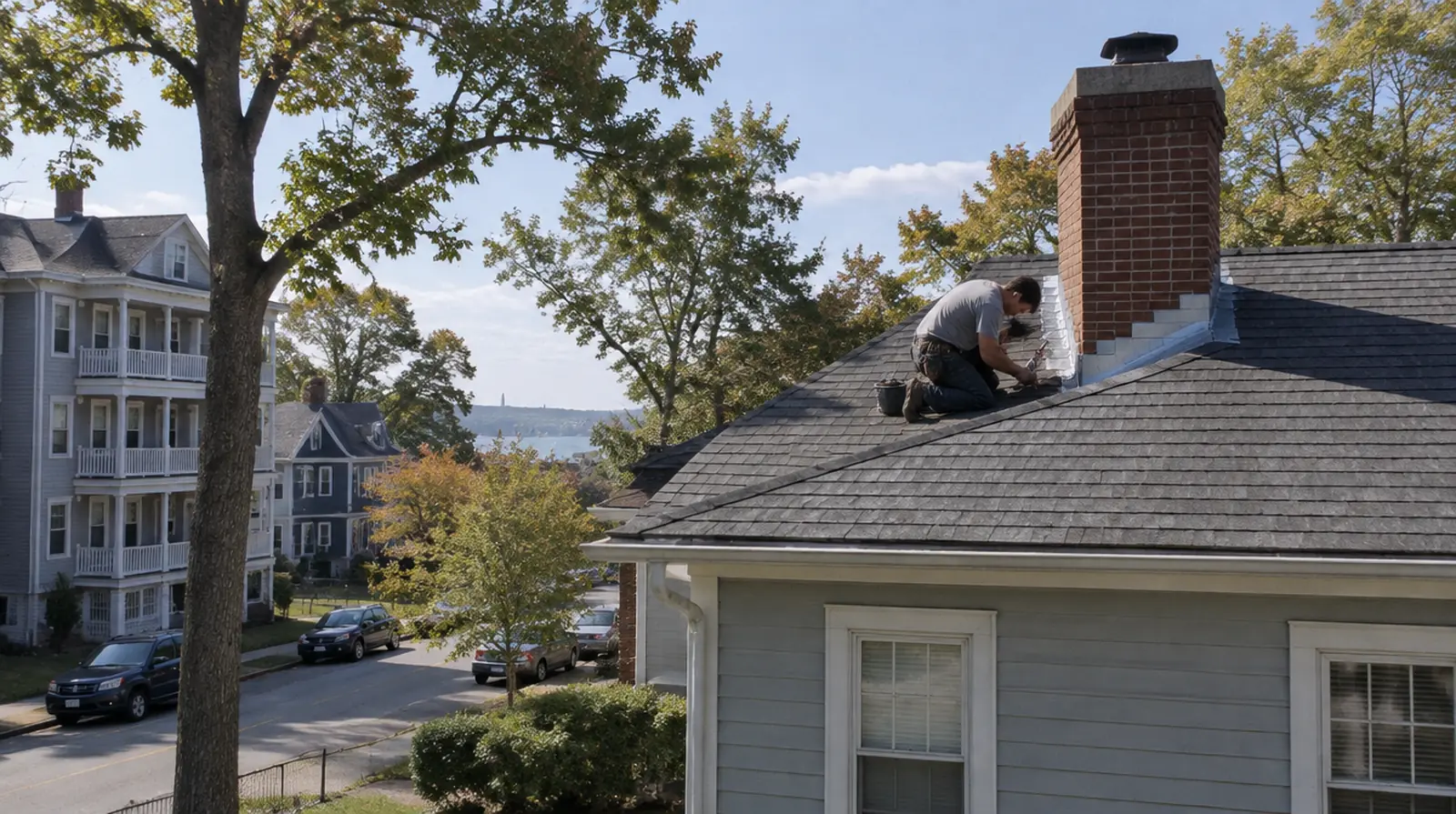
Brick chimneys on New Haven's older houses are among the most common leak sources. Mortar washes out, crowns crack and the flashing at the roof line is often old tar and patched metal. We install new step and counter-flashing cut into the mortar joints, seal small crown cracks and tell you plainly when the masonry needs a mason. Unused chimneys can sometimes be capped or removed below the roof line to eliminate the leak source.
Leaks from flat rear roofs
On two- and three-family houses, a stain in the back bedroom or kitchen of the top unit usually points to the low rear roof. Clogged scuppers, open seams and failed flashing where the rear roof meets the taller front section are the usual suspects. We clear the drainage, repair the membrane and reflash the transition so water from the upper slope runs onto a sealed surface.
Roof leak repair FAQs
Can you find a leak that only happens in certain storms?
Usually, yes. Knowing when it leaks narrows the search, and water testing confirms it.
Do you fix leaks in multi-family buildings?
Yes, and we coordinate access with tenants.
Will insurance cover my leak?
It depends on the cause and your policy. We provide photos and notes for your agent.
How fast can you come?
Call (475) 252-7906 and tell us if water is coming in.
Have an active roof leak?
Call (475) 252-7906 and tell us what you are seeing. We will set a time to trace it.